Internet Explorer, Chrome Browser, Firefox Browser, Safari Browser
Press Release02 December 2025Siemens AGMunich
Siemens powers Oslo’s metro digitalization with state-of-the-art CBTC system
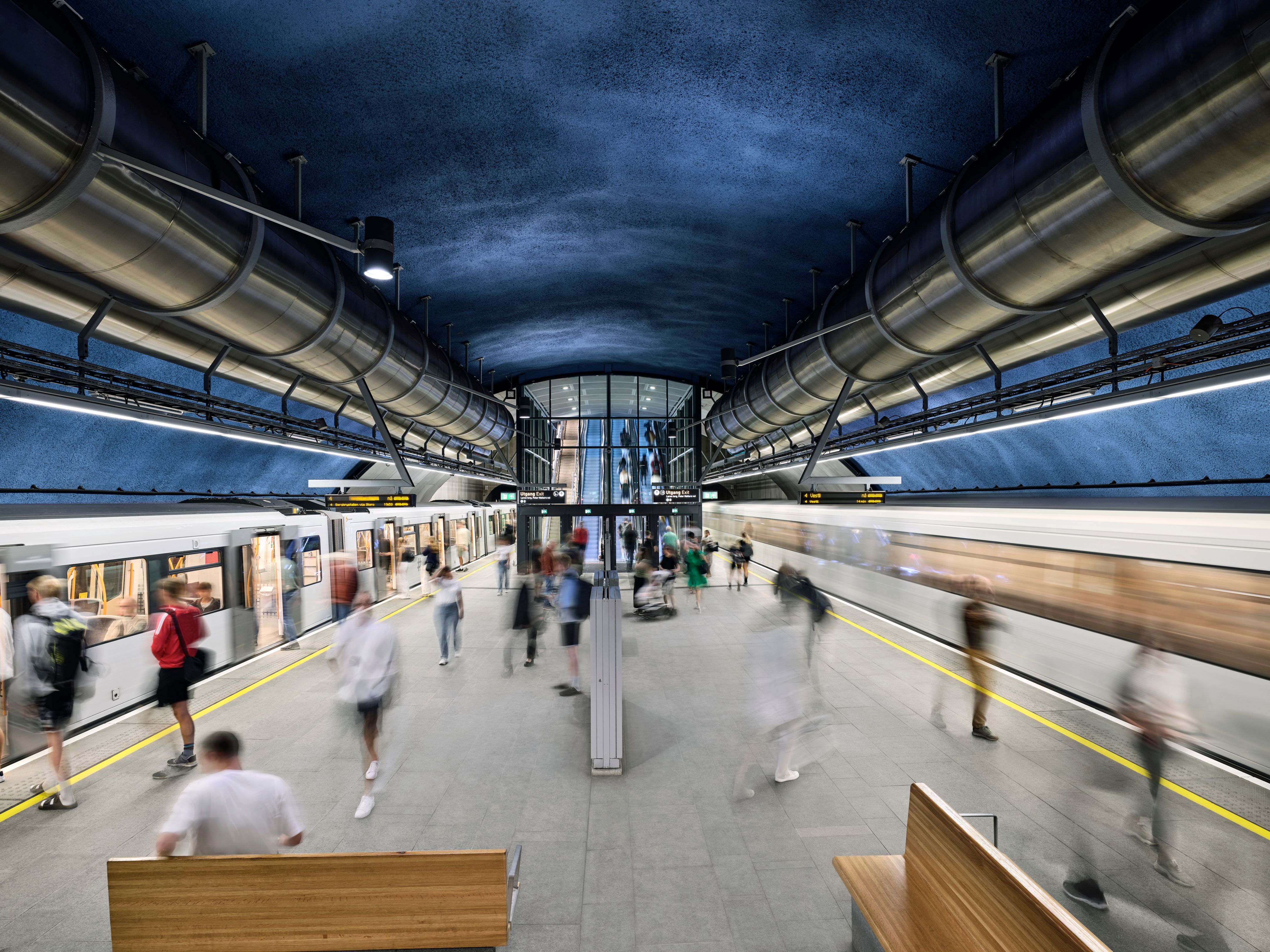
First Norwegian advanced signaling system for metro operations, boosting capacity by 30%. Photo source: Siemens Mobility
Siemens Mobility and Sporveien today
commissioned the modern Communications-Based Train Control (CBTC) system for
passenger service on an initial, three-kilometer-long section of the Oslo Metro.
The €270 million signaling project, awarded to Siemens Mobility in 2021,
encompasses the complete replacement of the legacy signaling system across the
entire 86-kilometer-long network and integration of the new Fornebubanen line.
With Siemens Mobility’s CBTC solution Trainguard MT, operating at Grade of
Automation Level 2 (GoA2), Oslo Metro can now handle 36 trains per hour, up
from 28 previously. This is a capacity boost of around 30%. Combined with 25
years of digital maintenance services and intelligent
asset management through Siemens Mobility’s Railigent X, this modernization ensures
maximum reliability and connectivity supporting Oslo's ambitious goal of
becoming the world's first emission-free city.
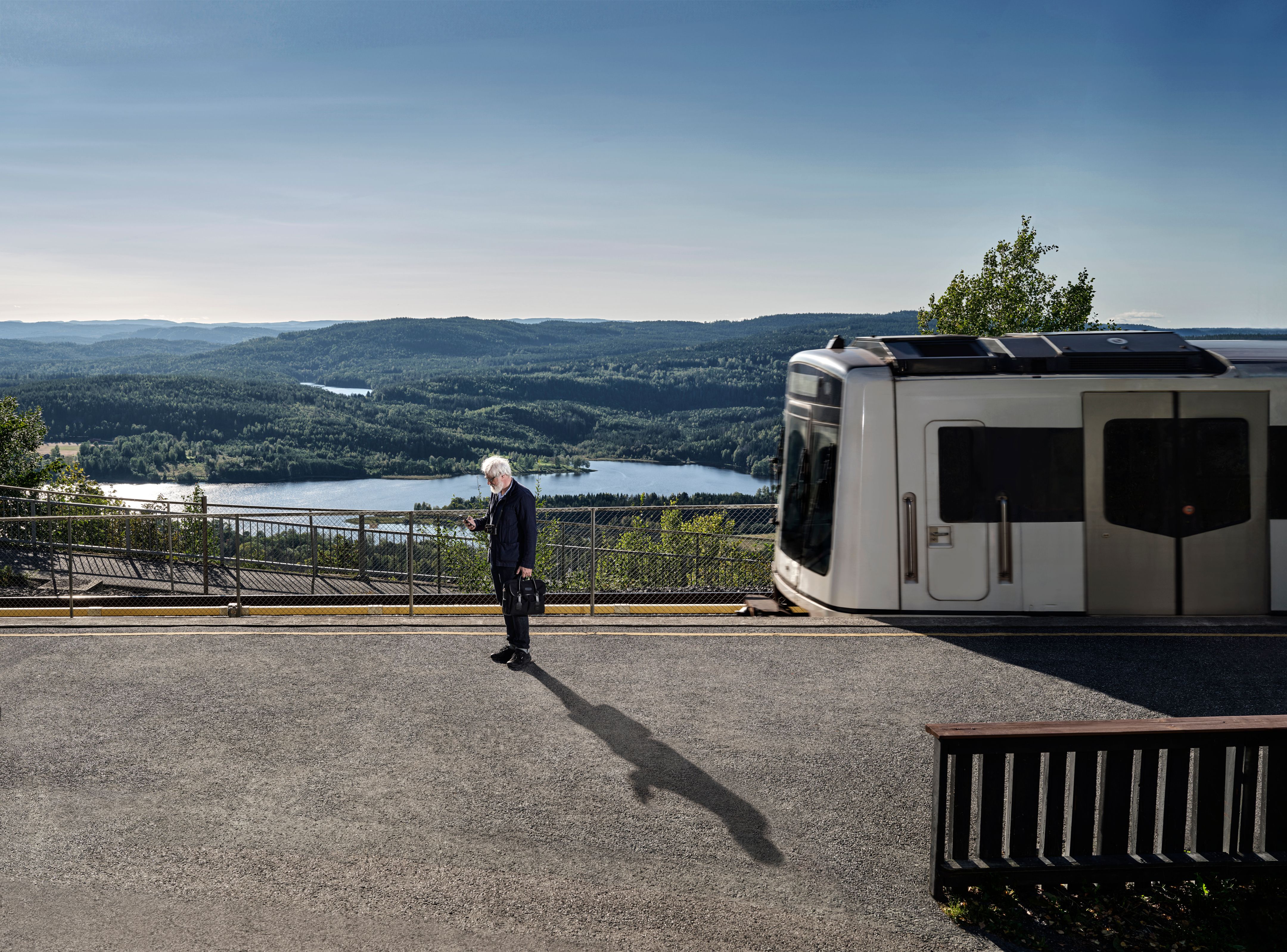
Customer Service: 25 years digital support for highest reliability and Oslo’s emission-free goal. Photo source: Siemens Mobility
"Our partnership with Sporveien dates back nearly 130 years to the Holmenkollen Line. Today, we are proud to introduce Norway’s first CBTC system, bringing Oslo’s metro into a new era. This milestone will increase capacity by around 30%, enabling more frequent departures and promoting sustainable mobility for travelers, says
Michael Peter, CEO of Siemens Mobility. “The new system supports Oslo in its ambition to become the world’s first zero-emission city.”
This modernization project includes a complete upgrade of Oslo’s Metro network, and seamlessly integrating the new 8-kilometer Fornebubanen extension with six stations. A pioneering innovation in this project is the secure use of public LTE mobile networks for critical train control communications, making Oslo the first metro in Europe to adopt this cost-saving and forward-looking approach.
Capacity boost for Oslo’s metro
The new system possesses the technical and theoretical capacity
to operate up to 40 trains per hour. This capability is vital for accommodating
the new Fornebubanen line and ensuring highly reliable operations across the
network. Should this full potential be realized, it would represent an overall
capacity increase of over 40% compared to the pre-modernization capacity of 28
trains per hour.
Norway: Pioneer in
Digitalized Rail Transport
Norway is setting a
global benchmark in rail digitalization, aiming to centrally control and
monitor its 4,200 km mainline railway network and over 350 stations. Bane NOR, the state-owned company responsible for railway infrastructure, is
leading this €2 billion digitalization initiative with Siemens Mobility,
focusing on automated signaling systems and upgrades to European Train Control
System Level 2 technology. Projects like Sporveien's CBTC
rollout underline Norway’s dedication to innovation and sustainability,
positioning the country as a leader in efficient and eco-friendly public
transport solutions.
For this press release
Siemens Mobility is a separately managed company of Siemens AG. As a leader in intelligent transport solutions for more than 175 years, Siemens Mobility is constantly innovating its portfolio. Its core areas include rolling stock, rail automation and electrification, a comprehensive software portfolio, turnkey systems as well as related services. With digital products and solutions, and the use of industrial AI, Siemens Mobility is enabling mobility operators worldwide to make their infrastructure intelligent, increase value sustainably over the entire lifecycle, enhance passenger experience, and guarantee availability. In fiscal year 2025, which ended on September 30, 2025, Siemens Mobility posted revenue of €12.4 billion and employed around 43,400 people worldwide. Further information is available at:
www.siemens.com/mobility