Internet Explorer, Chrome Browser, Firefox Browser, Safari Browser
Press Release20 November 2025Smart InfrastructureZug
Siemens unveils flexibility software to increase electricity grid capacity, moving towards autonomous grid management
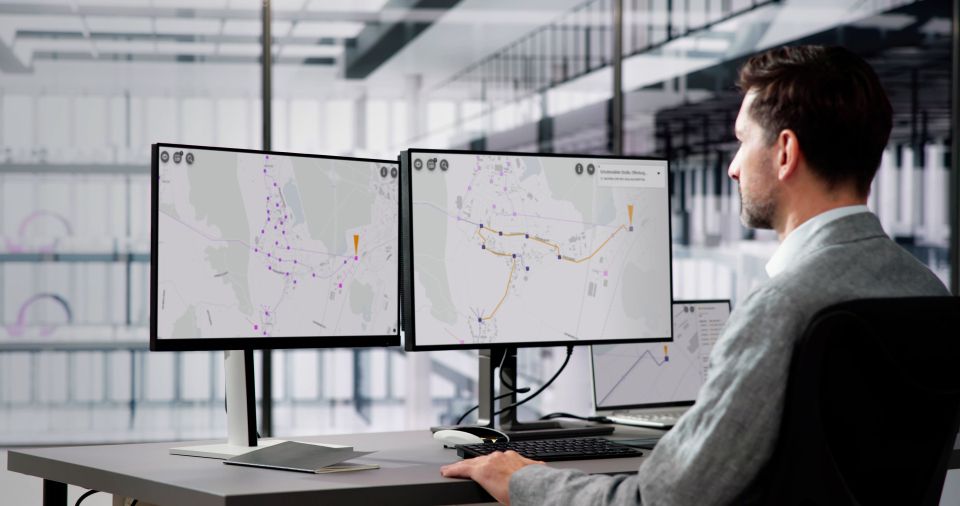
Siemens unveils flexibility software to increase electricity grid capacity, moving towards autonomous grid management
DSOs continue to face the increasing challenges of grid congestion and capacity constraints. At the same time, electrification is seen as the most feasible way to achieve net zero energy systems, but it is held back by inadequate grid infrastructure. In a recent
study, 74 percent of energy executives said that smart grids and grid software are crucial enablers for the energy transition. In distribution grids in particular, digital technologies are crucial to gain insights and visibility over the grid, so that grid operators can effectively monitor, predict, and manage the flow of electricity.
"Unlocking the potential of flexibility for grid planning and operations is a game-changer for DSOs navigating the energy transition," said Sabine Erlinghagen, CEO of Siemens Grid Software. "With Gridscale X, utilities can maximize the use of existing infrastructure, accelerate renewable integration and data center connections and make smarter investments to deliver a more resilient energy future. It's not just about managing today’s grid but shaping tomorrow’s autonomous energy landscape."
About Gridscale X Flexibility Manager
Gridscale X is a software platform that paves the way for autonomous grid management. It is part of Siemens Xcelerator, an open digital business platform that enables customers to accelerate their digital transformation easier, faster, and at scale. Gridscale X Flexibility Manager empowers operators to forecast potential grid congestion and proactively manage flexible resources. It complements traditional grid reinforcement efforts by unlocking existing network capacity and enhancing operational stability.
The software integrates with DSO systems to continuously monitor grid conditions and forecast potential overloads. When constraints are predicted, it identifies available flexibility options from distributed resources — such as electric vehicles, heat pumps, batteries, or distributed generation — and supports operators in selecting and activating the most effective measures via connected market or operator platforms to balance the grid. By using the software, DSOs can increase grid capacity utilization by up to 20 percent and save up to 40 percent in grid investment costs by strategically leveraging flexibility.
Flexible management case study: Kärnten Netz (“KNG”)
With the rapid growth of distributed generation, the Austrian utility, KNG, is currently preparing to operate an increasingly complex and dynamic grid. By 2030, photovoltaic installed capacity in Carinthia (an Austrian state with 9,500 km2 and a population of 570,000 inhabitants) is expected to nearly double (+1.1 GW), creating new challenges of congestion and voltage stability, particularly in rural valley areas with long distribution lines prone to voltage violations. At the same time, Austrian regulation is moving toward a market-based flexibility framework, requiring DSOs like KNG to explore new operational and digital capabilities. Anticipating this, KNG joined forces with Siemens to co-innovate a solution, culminating in the launch of Flexibility Manager.
“We are facing a new and increasingly complex regulatory framework, combined with massive challenges in system operations as we transition to a cleaner energy future,” says Robert Schmaranz, Head of Operations at KNG. “Collaborating with Siemens, we were able to address real network challenges while preparing for the upcoming market-based flexibility framework. The collaboration also gave us the opportunity to exchange experiences with other European DSOs, sharing best practices as we collectively shape the next phase of flexibility implementation.”
Siemens Smart Infrastructure (SI) is shaping the market for intelligent, adaptive infrastructure for today and the future. It addresses the pressing challenges of urbanization and climate change by connecting energy systems, buildings, and industries. SI provides customers with a comprehensive end-to-end portfolio from a single source – with products, systems, solutions, and services from the point of power generation all the way to consumption. With an increasingly digitalized ecosystem, it helps customers thrive and communities progress while contributing toward protecting the planet. To protect this journey, we foster holistic cybersecurity to ensure secure and reliable operations. Siemens Smart Infrastructure has its global headquarters in Zug, Switzerland. As of September 30, 2025, the business had around 79,400 employees worldwide.
Siemens AG (Berlin and Munich) is a leading technology company focused on industry, infrastructure, mobility, and healthcare. The company’s purpose is to create technology to transform the everyday, for everyone. By combining the real and the digital worlds, Siemens empowers customers to accelerate their digital and sustainability transformations, making factories more efficient, cities more livable, and transportation more sustainable. A leader in industrial AI, Siemens leverages its deep domain know-how to apply AI – including generative AI – to real-world applications, making AI accessible and impactful for customers across diverse industries. Siemens also owns a majority stake in the publicly listed company Siemens Healthineers, a leading global medical technology provider pioneering breakthroughs in healthcare. For everyone. Everywhere. Sustainably. In fiscal 2025, which ended on September 30, 2025, the Siemens Group generated revenue of €78.9 billion and net income of €10.4 billion. As of September 30, 2025, the company employed around 318,000 people worldwide on the basis of continuing operations. Further information is available on the Internet at www.siemens.com.