Internet Explorer, Chrome Browser, Firefox Browser, Safari Browser
Press Release18 June 2026Digital IndustriesChicago/Erlangen
Siemens expands accessibility to Software-Defined Automation with Simatic AX
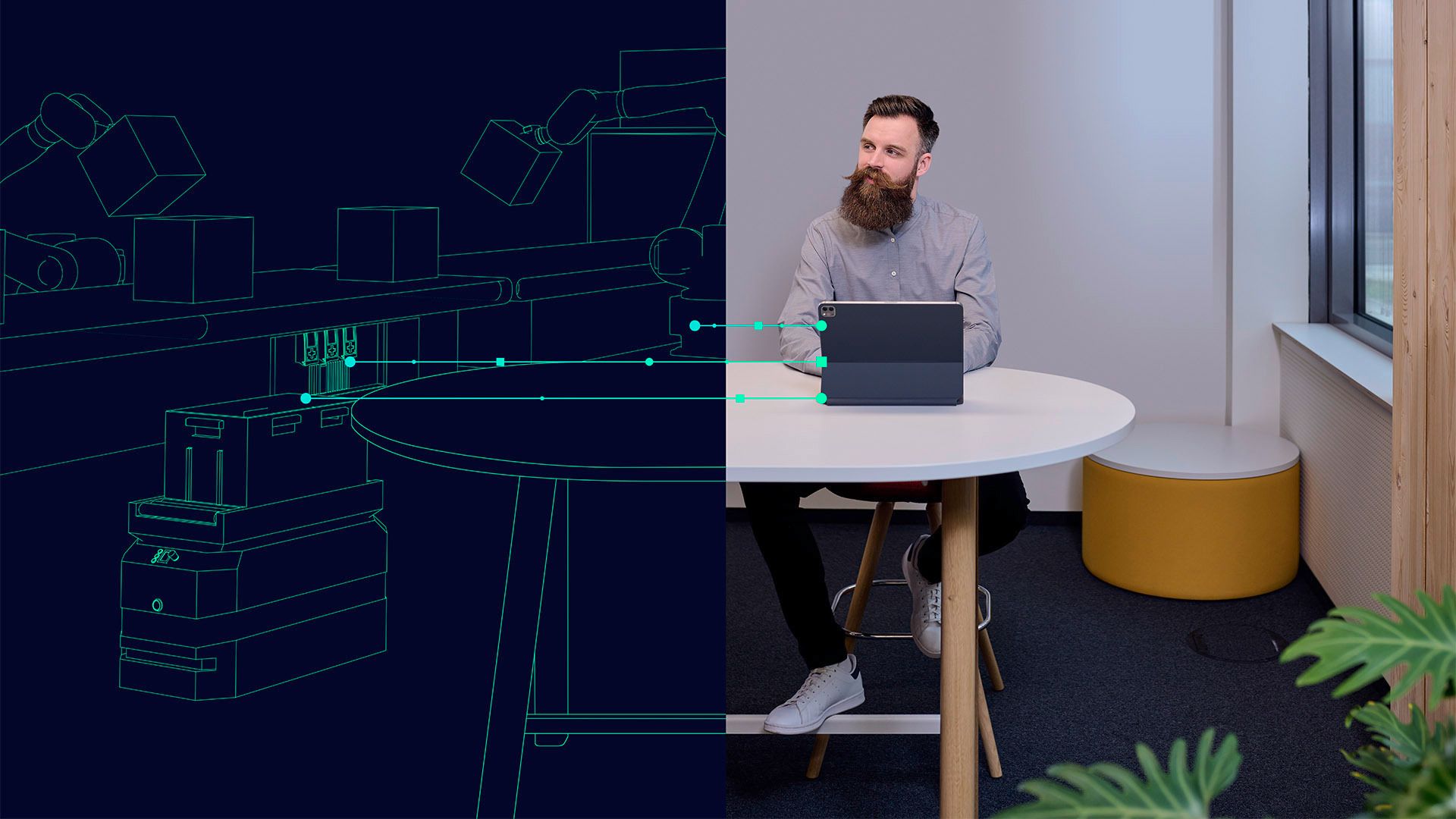
Simatic AX Logic Control Engineering offers state-of-the-art IT tools for programming and maintaining Simatic PLCs.
Making IT-like engineering accessible for OT users
Until now, Simatic AX Logic Control Engineering has been designed as a fully Structured Text (ST)-based engineering environment, tailored primarily to software automation engineers. With the addition of ladder programming within Simatic AX, Siemens enables service and maintenance technicians, as well as engineers with a preference for graphical logic representation, to work more intuitively with control programs. This reduces onboarding time, simplifies troubleshooting, and improves collaboration as more users in the industrial ecosystem, both from OT and IT, can participate and collaborate across automation workflows.
“By introducing ladder programming to Simatic AX Logic Control Engineering, we’re making Software-Defined Automation more accessible to a broader user base from the world of operational technology – bringing the digital and the real worlds closer together”, said Rainer Brehm, COO for automation and CTO at Siemens Digital Industries. “This creates new opportunities for efficient engineering, maintenance and collaboration.”
Bringing modern software workflows to industrial automation
Bringing modern software workflows to industrial automationXLad is the first text-based ladder programming tool to be integrated into Simatic AX Logic Control Engineering. It brings software development practices such as version control, automated testing, and continuous integration into the world of ladder logic. With integrated support for Git and CI/CD workflows (Continuous Integration and Continuous Delivery/Deployment), users can manage changes to ladder logic more transparently, collaborate more effectively across teams and increase software quality in engineering.
The seamless interaction of XLad with Structured Text (ST) enables users to reuse libraries created in ST by integrating them into ladder logic applications. The object-oriented programming and intuitive readability of ladder diagrams make it easier to implement complex control logic with unprecedented clarity and efficiency.

Siemens has introduced ladder programming called XLad as the first graphical programming language in Simatic AX Logic Control Engineering.
Bidirectional programming plus AI-ready and human-readable code
In addition, XLad supports bidirectional programming: users can switch between a graphical view and a text-based editor depending on their workflow preferences. Its textual representation is both human-readable and AI-ready, laying the groundwork for future AI-supported engineering use cases such as AI-assisted development of control logic. Furthermore, text-based representation is the basis for easy version management using Git.
New applications with expanded hardware support
At the same time, Siemens is extending the hardware scope of Simatic AX Logic Control Engineering by adding support for its controller Simatic S7-1200 G2. This opens a new spectrum of projects to be solved with SIMATIC AX LCE. Previously, Simatic AX focused on supporting Simatic S7-1500 controllers. Now, users can also apply Simatic AX LCE to the engineering of basic automation controllers.
Siemens is presenting these innovations at Automate in Chicago from June 22 to 25, where the company is highlighting how software-defined automation can be made more practical, scalable, and accessible across a wide range of industrial applications.
For this press release
Follow us at
Siemens Digital Industries (DI) is an innovation leader in automation and digitalization. Closely collaborating with partners and customers, DI drives the digital transformation in the process and discrete industries. With its Digital Enterprise portfolio, DI provides companies of all sizes with an end-to-end set of products, solutions and services to integrate and digitalize the entire value chain. Optimized for the specific needs of each industry, DI’s unique portfolio supports customers to achieve greater productivity and flexibility. DI is constantly adding innovations to its portfolio to integrate cutting-edge future technologies. Siemens Digital Industries has its global headquarters in Nuremberg, Germany, and has around 72,000 employees internationally.
Siemens AG (Berlin and Munich) is a leading technology company focused on industry, infrastructure, mobility, and healthcare. The company’s purpose is to create technology to transform the everyday, for everyone. By combining the real and the digital worlds, Siemens empowers customers to accelerate their digital and sustainability transformations, making factories more efficient, cities more livable, and transportation more sustainable. A leader in industrial AI, Siemens leverages its deep domain know-how to apply AI – including generative AI – to real-world applications, making AI accessible and impactful for customers across diverse industries. Siemens also owns a majority stake in the publicly listed company Siemens Healthineers, a leading global medical technology provider pioneering breakthroughs in healthcare. For everyone. Everywhere. Sustainably. In fiscal 2025, which ended on September 30, 2025, the Siemens Group generated revenue of €78.9 billion and net income of €10.4 billion. As of September 30, 2025, the company employed around 318,000 people worldwide on the basis of continuing operations. Further information is available on the Internet at www.siemens.com.